
Buying a used electric car involves many of the same checks as buying any other second-hand vehicle. You still need to consider its condition, history, mileage, documentation and suitability for your needs. There are also a few EV-specific points to look at, including realistic range, charging equipment and any battery or warranty information supplied with the car.
This guide will help you work through those checks in a sensible order. It is intended as practical buying guidance rather than a technical assessment of an individual vehicle. Where you need confirmation about a battery, warranty or charging system, speak to the manufacturer or a suitably qualified EV specialist.

Start with the journeys you actually make
Before comparing cars, work out what you need the vehicle to do.
Think about your normal weekly mileage, the length of your longest regular journey and where the car will usually be charged. A shorter-range EV may be entirely suitable for local travel, commuting or use as a second household car. Someone who regularly makes long motorway journeys may place more importance on range and charging speed.
Do not judge a car solely by the official range quoted when it was new. Real-world range can vary with the exact model, battery version, age, weather, driving speed, heating or air-conditioning use, tyre condition and vehicle load.
Use our used electric vehicle range calculator as an approximate planning tool, then check the manufacturer’s information for the exact model you are considering.
Check the exact model and battery version
Two cars with similar names can have different battery sizes, charging capabilities, equipment and original range figures. Confirm the exact model, trim and battery version rather than relying on the badge or registration year alone.
Check:
- the exact model and trim;
- battery size or version;
- original manufacturer range figure;
- maximum AC and rapid-charging capability;
- standard and optional equipment;
- whether features you expect are included or require a subscription;
- whether the car can use the charging facilities available to you.
This information should be checked against manufacturer documentation for that specific model and year.

Ask what battery information is available
Battery condition is an understandable concern for used-EV buyers, but the information available is not identical for every make and model.
Ask whether the seller has supplied any battery-condition report, diagnostic record or information from the manufacturer. If a report is available, check:
- who produced it;
- when it was produced;
- what was tested;
- whether it applies to the vehicle you are viewing;
- whether its conclusions have any stated limitations.
A dashboard range estimate is not the same as an independent battery-health assessment. It can be influenced by recent journeys, driving style, temperature and the vehicle’s current settings.
Hobbs Parker will describe the information supplied with an auction vehicle but does not independently certify battery health. If battery condition is important to your decision and suitable evidence is not available, take advice from the manufacturer or an appropriately qualified EV specialist before bidding.
Check the remaining manufacturer warranty
Battery and electric-drive warranties vary by manufacturer, model, age and mileage. Do not assume that a general warranty period applies to the particular car you are considering.
Check:
- whether any vehicle or battery warranty remains;
- the applicable time and mileage limits;
- whether the warranty transfers to the next owner;
- any servicing or inspection requirements;
- what level of battery performance, if any, the warranty covers;
- whether previous repairs or use affect the cover.
Use the vehicle identification number where required and confirm the position with the manufacturer or an authorised repairer.
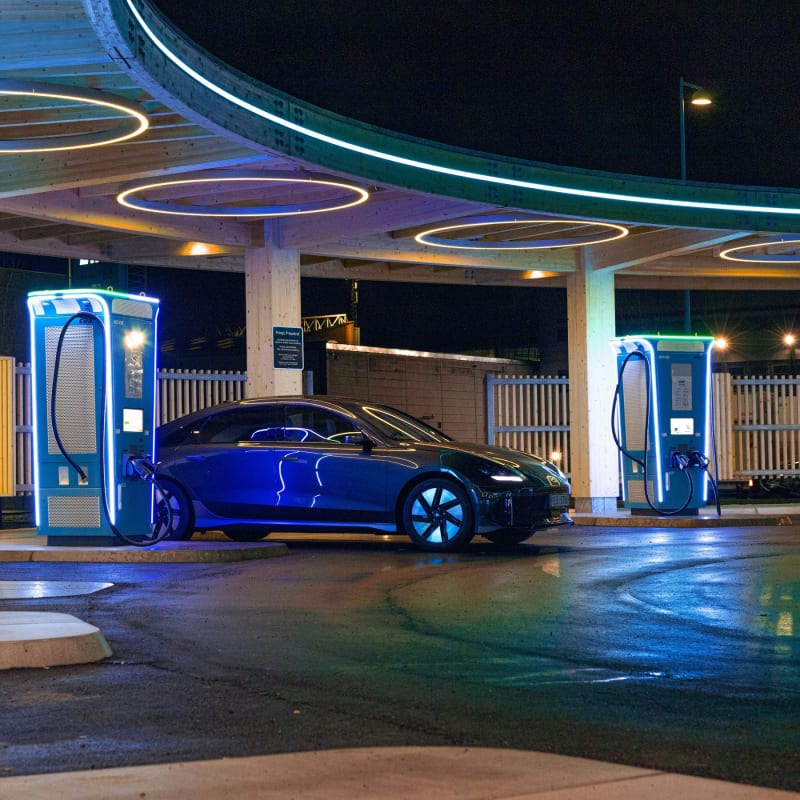
Inspect the charging port and cables
Confirm which charging cables and adaptors should come with the vehicle and which are actually included. Replacement cables can be an unwelcome additional expense.
Look for:
- damage to the cable or outer insulation;
- bent, damaged or corroded connectors;
- damage around the vehicle’s charging port;
- covers or flaps that do not close correctly;
- warning messages when the vehicle is switched on;
- signs that a supplied cable is not suitable for that vehicle.
Do not dismantle or attempt to repair high-voltage equipment yourself. If anything looks damaged or you are uncertain about it, seek qualified advice.
Check the vehicle’s history and documents
The normal checks for any used car remain important.
Review:
- the V5C registration document;
- the vehicle identification number;
- MOT history and recorded mileage;
- service and maintenance records;
- outstanding finance, theft and insurance write-off history;
- recall information;
- number of previous keepers;
- details of previous repairs;
- all keys and supplied equipment.
Early electric cars were sometimes sold with a separate battery-lease arrangement. If you are considering an older model, confirm whether the battery is owned with the vehicle and whether any agreement remains relevant.

Inspect the tyres, brakes, suspension and underbody
An EV still has tyres, brakes, suspension, steering and other components that wear with use.
Check the tyres for tread depth, damage and uneven wear. Look at the wheels and visible underbody for signs of impact damage. During a test drive, listen for unusual noises and pay attention to the way the car steers, brakes and travels over uneven surfaces.
Regenerative braking can mean the conventional brakes are used differently from those on a petrol or diesel car, but they still require inspection and maintenance. If you are not confident assessing the vehicle, arrange an appropriate independent inspection.
Test the controls, heating and technology
Operate the equipment you expect to use, including:
- heating and air conditioning;
- heated seats or steering wheel where fitted;
- infotainment and navigation;
- reversing cameras and parking sensors;
- charging settings and timers;
- mobile-app connectivity where relevant;
- windows, mirrors, lights and driver-assistance systems.
Ask whether the vehicle has received the manufacturer’s required software updates. Check whether connected services transfer to a new owner and whether any subscription charges apply.
Used EV test-drive checklist
If a test drive is available, use it to assess the whole vehicle rather than trying to diagnose the high-voltage battery yourself.
Before moving off, check that the car starts normally and look for warning messages on the driver display. Make sure the remaining charge is sufficient for the planned drive. Adjust the seat and mirrors, then check the heating, air conditioning, demisting, infotainment and reversing camera or parking sensors where fitted.
During the drive:
- check that acceleration is smooth and predictable;
- listen for unusual knocks, vibration or excessive road noise;
- check that the steering tracks correctly and feels consistent;
- use the brakes at different speeds where it is safe to do so;
- try the available regenerative-braking settings;
- watch for warning lights or messages;
- check that the indicated charge and range behave plausibly during the journey;
- include a mixture of road types where the route and conditions allow.
After the drive, look again for warning messages and note the displayed energy consumption if it is available. A short test drive cannot establish battery health or prove the range the car will achieve in every condition. Arrange an appropriate independent inspection if you need a more detailed assessment.
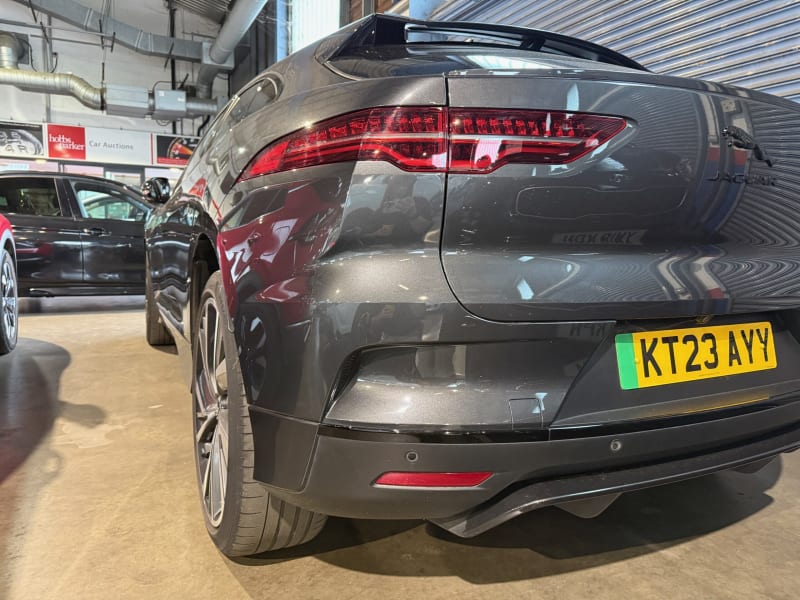
Check insurance and charging before you commit
Obtain an insurance quotation for the exact registration before buying. Insurance costs can vary significantly between models and drivers.
Plan how you will charge the vehicle. Consider whether you can charge at home or work, the cost of installing a home charge point if required, the public chargers available on your regular routes and the tariffs you are likely to use.
The purchase price is only one part of the decision. The right EV is one that works with your journeys, charging access and overall budget.
Buying an electric car at auction
If you are buying through an auction, read the lot description, photographs and vehicle information carefully. Understand what the vehicle grade covers, what documents and cables are listed, the applicable buyer’s fee and the terms under which the vehicle is offered.
We recommend viewing a vehicle in person before bidding whenever possible. Decide your maximum total spend in advance, allowing for the buyer’s fee and any work or missing equipment you have identified.
Hobbs Parker’s online timed auctions are open to private and trade buyers. Our team can explain the registration, bidding, payment and collection process, but the buyer remains responsible for deciding what checks are needed before bidding.
READ OUR ELECTRIC CAR AUCTION GUIDE | VIEW UPCOMING AUCTIONS | REGISTER FOR ONLINE BIDDING
Used electric car checklist
Before you buy, confirm that you have:
- considered whether the car’s realistic range suits your journeys;
- identified the exact model, battery version and charging capability;
- reviewed any battery information supplied and understood its limitations;
- checked the remaining manufacturer warranty directly;
- inspected the charging port, cables and adaptors;
- checked the V5C, VIN, MOT, mileage and service history;
- completed an appropriate vehicle-history check;
- inspected the tyres, brakes, suspension, bodywork and underbody;
- tested the heating, controls, displays and technology;
- obtained an insurance quotation;
- planned where and how you will charge;
- understood the auction terms, fees and collection arrangements where applicable.
Need help with the auction process?
If you have a question about viewing, registering or bidding through Hobbs Parker, call our Car Auctions team on 01233 506266.
We can explain the auction process and the information supplied with a particular lot. For technical battery, warranty or high-voltage-system advice, contact the manufacturer or a suitably qualified EV specialist.